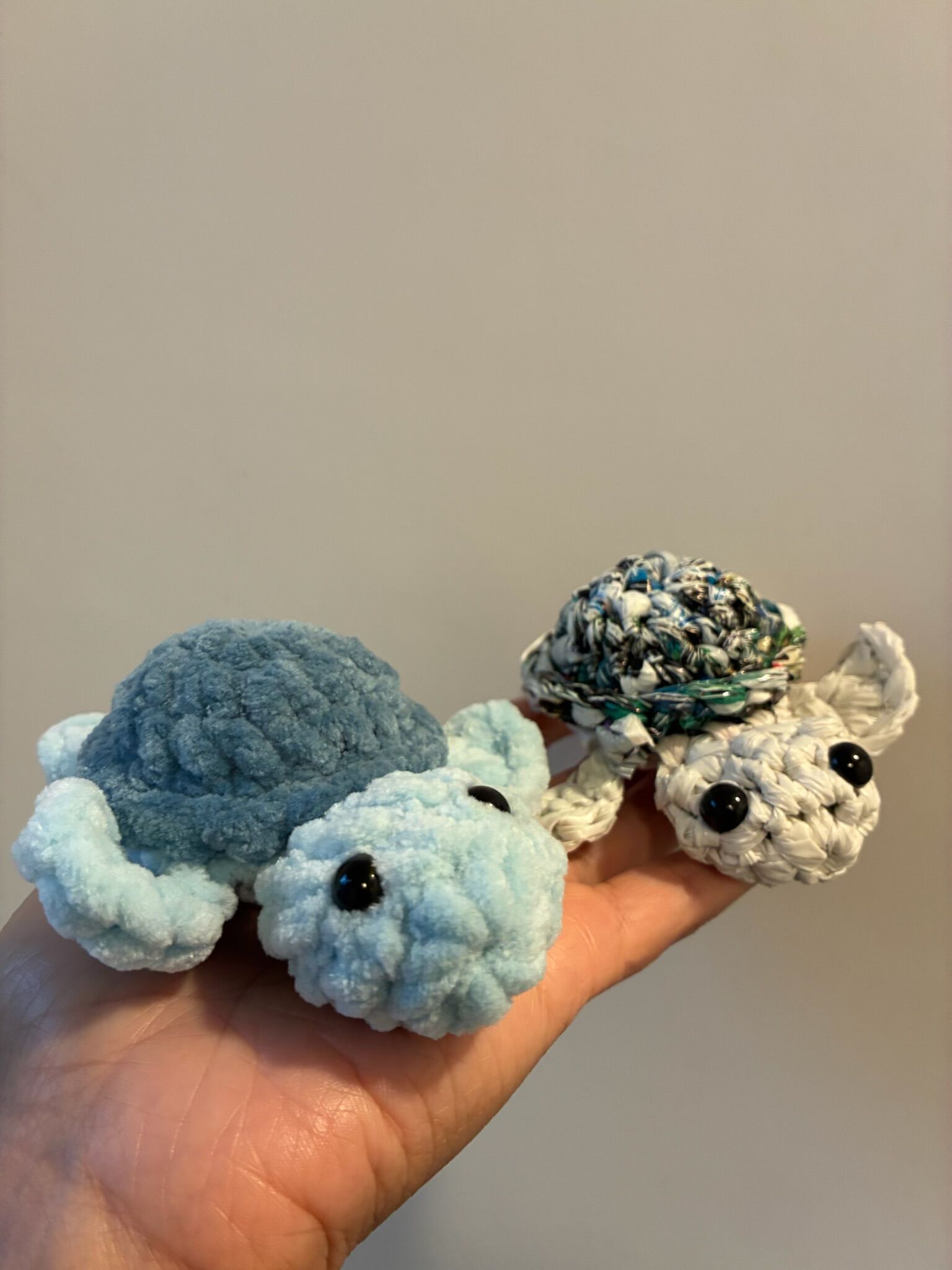
Acrylic yarn is okay to use in this case, because other natural fiber yarn can be very, very expensive. A small item with acrylic yarn might cost .25c to make, where it could cost $2-5 for natural yarn. If it’s a little desk buddy, like a crochet flower in a pot, for the most part it will just sit there, possibly for years, rather than a clothing item that will be worn only a few times.
Also, a lot of the times natural yarn actually has a larger carbon footprint than plastic yarn (wool yarn isn’t as eco-friendly as some people claim…)
Two ways of making crochet more sustainable (without plarn):
(1) Cheap ways of getting yarn of any kind, and helping keep things out of the landfill: Buy crochet items, especially blankets, from thrift stores, then take them apart and reuse them for something else. Crochet blankets almost never sell at thrift stores, and you get a lot of yarn. These could be either unraveled and made into something else, or cut apart and sewn into small items like coasters or coin purses (the coin purses can also have lining made using clothes from the thrift store).
(2) Save all those extra leftover strands of yarn you have. With the longer strands, tie them together so they make a multi-color yarn ball. With the tiny pieces, use those as stuffing for small animals.
With plarn:
Plarn vs cotton bags: It’s actually better to use the plastic bags. If you have a cotton bag, you need to reuse it something like 10 - 20 thousand times before it even begins to offset it’s carbon footprint. With a plarn bag, it will be reused probably 100 times, and because each bag needs over 100 plastic bags you’re reusing each of those 100+ bags at the same time. Plarn bags are also really sturdy, don’t stain as easily as cotton, don’t tear as easily, and because it’s a plarn bag people will pay a higher amount for it (especially if it goes to charity) than they would with a regular reusable bag.
Other idea for plarn: Sleeping mats, using a single crochet (UK)/slip stitch (US), double strands (how this would work with plarn is two of the bag loops at once). This will use up a few hundred plastic bags, the mats are waterproof, lightweight, and very warm.
Non-yarn related tip to anyone concerned about microplastics: Some vegetables like broccoli have a compound that neutralizes them.